

Card Games for Camping & Travel: One Deck, Multiple Games
Card Games for Camping & Travel | The Deck
Explore card games for camping, van life, RV travel, and road trips with The Deck, a portable 76-card system with multiple game modes.
Welcome to TheDeck.Cards!
The Deck is a 76-card multi-game card system built to make it easier to carry a variety of games almost anywhere.
That matters when you're camping, living in a van or RV, taking a road trip, or spending long stretches of time traveling. Space is limited, and bringing several separate card games or board-game boxes isn't always practical.
The Deck was created from that exact perspective. I've lived a nomadic life for more than ten years, and today I travel full-time in a van. I grew up loving games, but life on the road made me want something different: one compact physical game system that I could keep with me and turn into completely different games depending on the people, place, amount of time available, and mood.
There are currently multiple game modes you can play with The Deck. These four — Cambio the Original, Alaska the Card Game, The Rune Market, and Deck-Deck-Go — are some of the games I personally enjoy most while camping and traveling.
Quick Comparison: Travel Games With The Deck
Game | Players | Typical Time | Decks Needed | Good When You Want... |
|---|---|---|---|---|
Cambio the Original | 2–8 | 2–5 min. rounds | 1 Deck | A fast game you can play almost anywhere |
Alaska the Card Game | 2–6 | 10–15 min. | 1 Deck | A relaxed, nature-themed game |
The Rune Market | 2–5 | 30–45 min. | 1 Deck | A longer, highly interactive group game |
Deck-Deck-Go | 2–6 | 15–30 min. | Modified Double-Deck | Relaxed sequencing and longer casual play |
These aren't the only game modes that work for travel. One of the main ideas behind The Deck is that the same cards can be used for many different games. These are simply four that I find particularly easy to pull out while living and traveling on the road.
Cambio the Original: The Game I Play Almost Anywhere
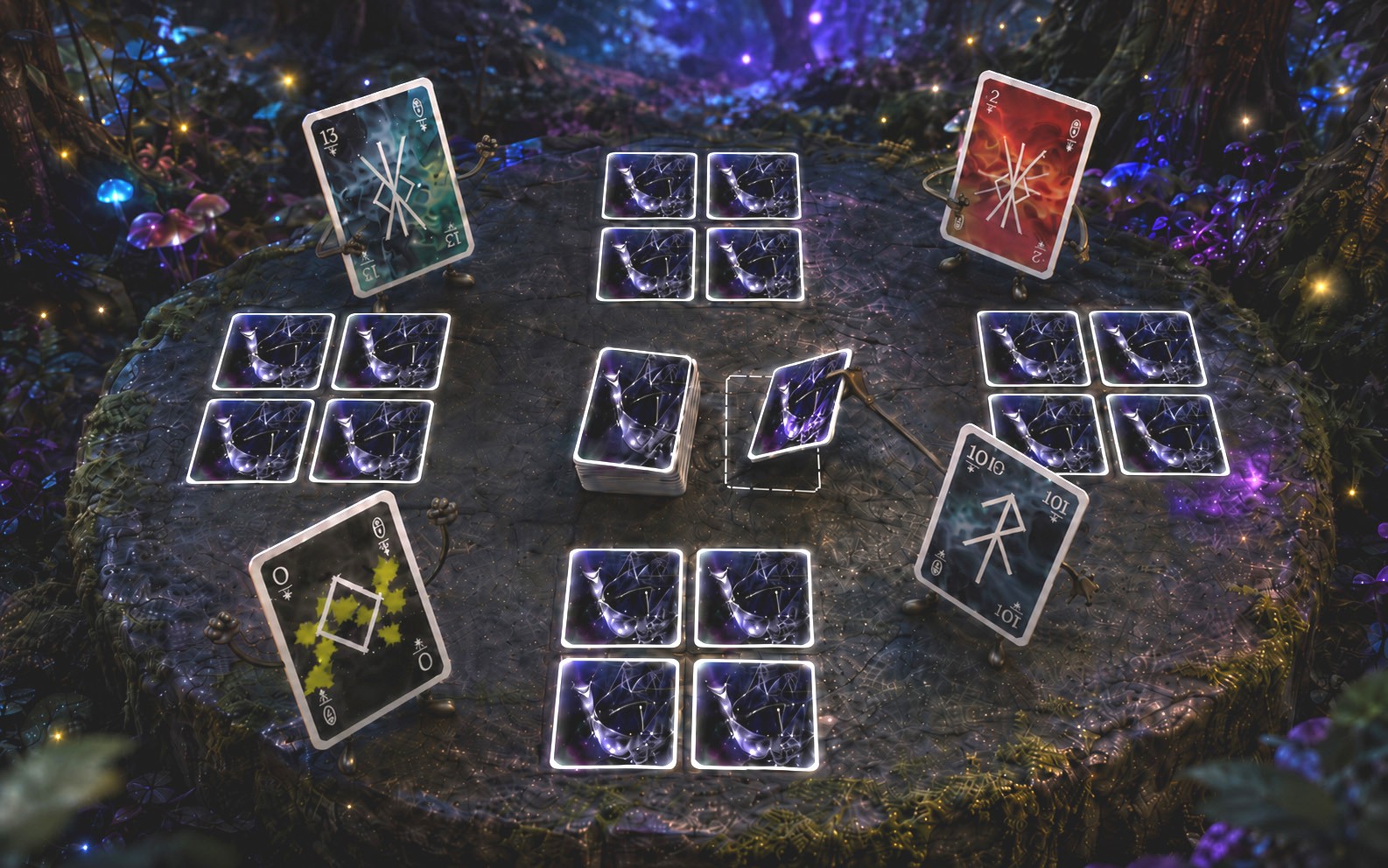
If I'm going to pull The Deck out somewhere unexpected, Cambio the Original is probably the game I'm playing.
Cambio uses very little space, rounds usually last only two to five minutes, and you can play as many or as few rounds as you want.
I've played Cambio at picnic tables, on folding tables, while waiting for food at restaurants, and even outside on the ground by putting down a shirt or something else to create a clean surface for the cards.
You don't have to commit to a full evening of playing.
You might play two rounds while you're waiting for something, shuffle the cards back together, put them in the bag, and continue with your day. Or you can keep playing round after round for much longer.
Cambio combines memory, strategy, bluffing and luck. As you become better at the game, there are increasingly deeper strategies and mind games that can develop between players, but the luck of the cards keeps individual rounds unpredictable.
It's also still the original game behind The Deck and the game I personally play most often.
For camping and travel, that combination of small playing area, very short rounds and high replayability makes Cambio incredibly easy to bring into almost any situation.
Players: 2–8
Typical round: 2–5 minutes
Decks required: 1
Learn how to play Cambio the Original →
Alaska the Card Game: Bring a Nature Game Into Nature
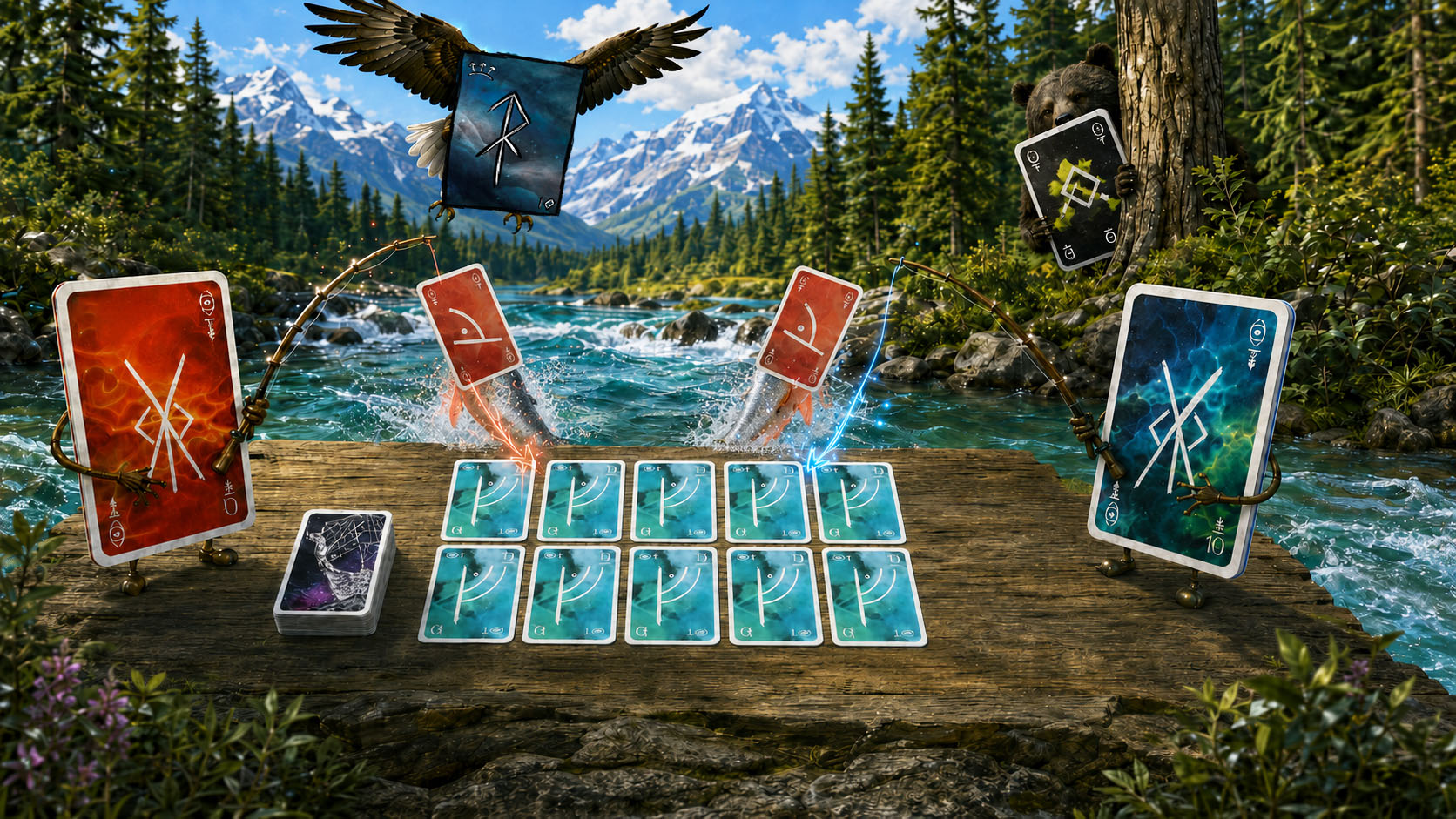
Alaska the Card Game has a very different feeling from Cambio.
It's a slower, more relaxed game built around a River, Salmon, anglers and other nature-themed elements. Playing a game centered around the outdoors while you're actually camping has its own kind of appeal.
A game usually takes around 10–15 minutes, so it's still easy to fit into an evening without requiring a major time commitment.
Alaska requires a little more tabletop space than Cambio because of the River setup, but you still don't need a large game board or a collection of separate pieces. A picnic table, folding camp table or other reasonably flat surface works well.
Alaska is also one of the easiest ways to understand how The Deck can completely change from one game mode to another. The familiar cards take on clear roles inside the fishing theme: Blue Runes become the River Cards, Red Runes become Salmon, Swap Runes become Flow Cards, and Number Cards become the Cast Cards used to catch Salmon. Red Kings are Tourists, Blue Kings are Locals, the Energy Rune becomes an Eagle, and the Chaos Rune becomes a Bear.
Those roles are visual, concrete and tied directly to the nature theme, which makes Alaska especially easy to grasp when someone is learning The Deck for the first time. Instead of memorizing an abstract set of powers, you're learning what each card represents inside the River.
If Cambio fits the moments where I want something quick and energetic, Alaska is something I'd choose when I want to slow down, play something beginner-friendly, and enjoy a game that feels especially at home outdoors.
Players: 2–6
Typical game: 10–15 minutes
Decks required: 1
Learn how to play Alaska the Card Game →
The Rune Market: An Evening Game Around Camp
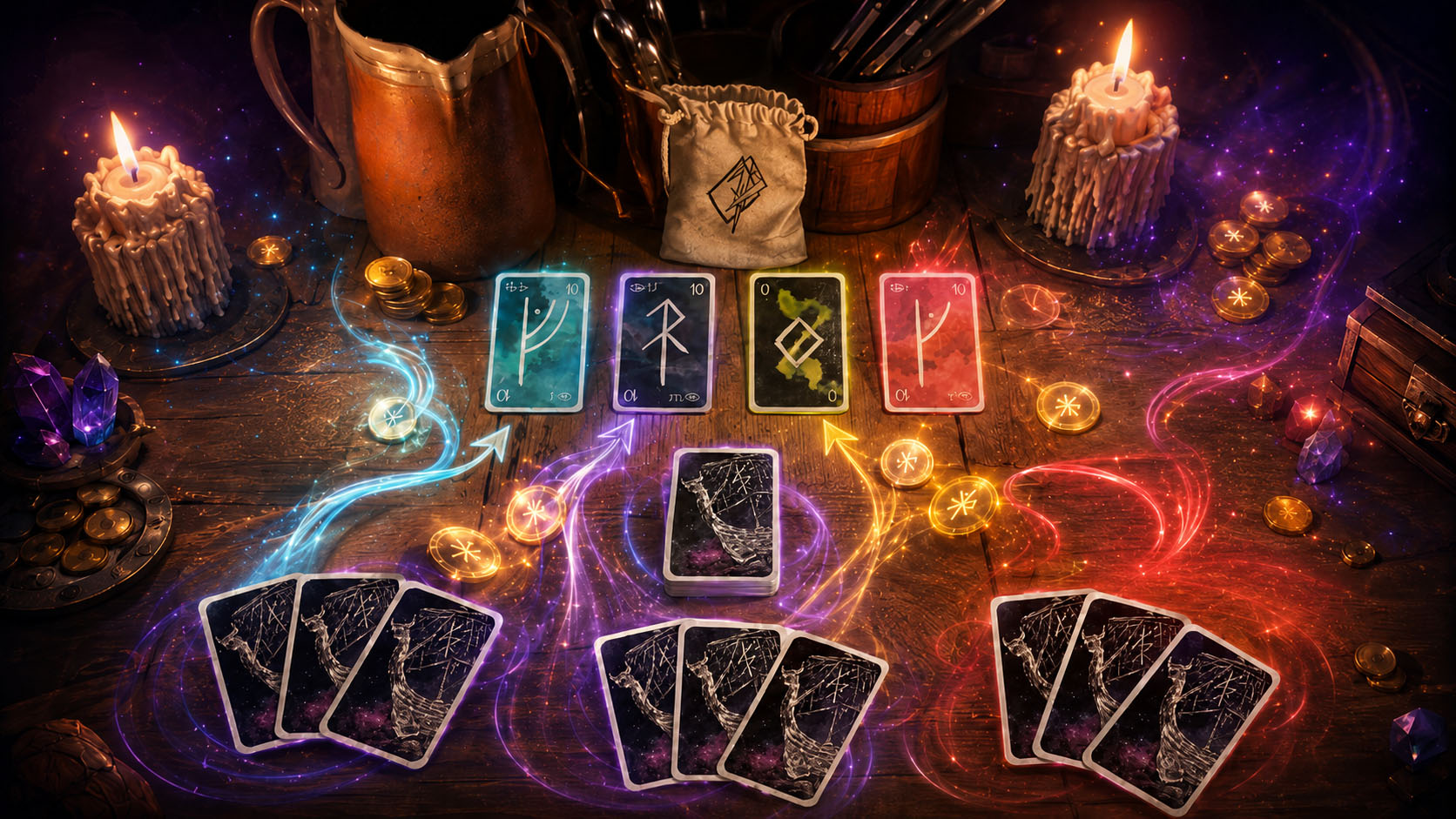
The Rune Market is the game on this list that feels most like something I'd pull out when everyone has settled into camp for the evening.
It's longer and more involved than Cambio or Alaska, with games generally lasting around 30–45 minutes. It's also highly interactive, which can make it especially fun with a small group.
The Rune Market supports two to five players and is especially good with three or four.
This isn't necessarily the game I'd pull out while waiting 15 minutes for food somewhere. It's more suited to having a flat surface, sitting down together and actually spending some time playing.
It can also get a little more antagonistic.
People interact with each other more directly, things can get funny, and there's more opportunity for players to get invested in what's happening around the table. That's part of why it fits the feeling of an evening at camp so well for me.
You don't need an enormous gaming table or a complicated setup. You just need enough room for the cards and enough time to actually get into the game.
If you're camping with friends and want something more involved after dinner, this is one of my favorite options.
Players: 2–5
Typical game: 30–45 minutes
Decks required: 1
Learn how to play The Rune Market →
Deck-Deck-Go: A Relaxed Double-Deck Travel Game
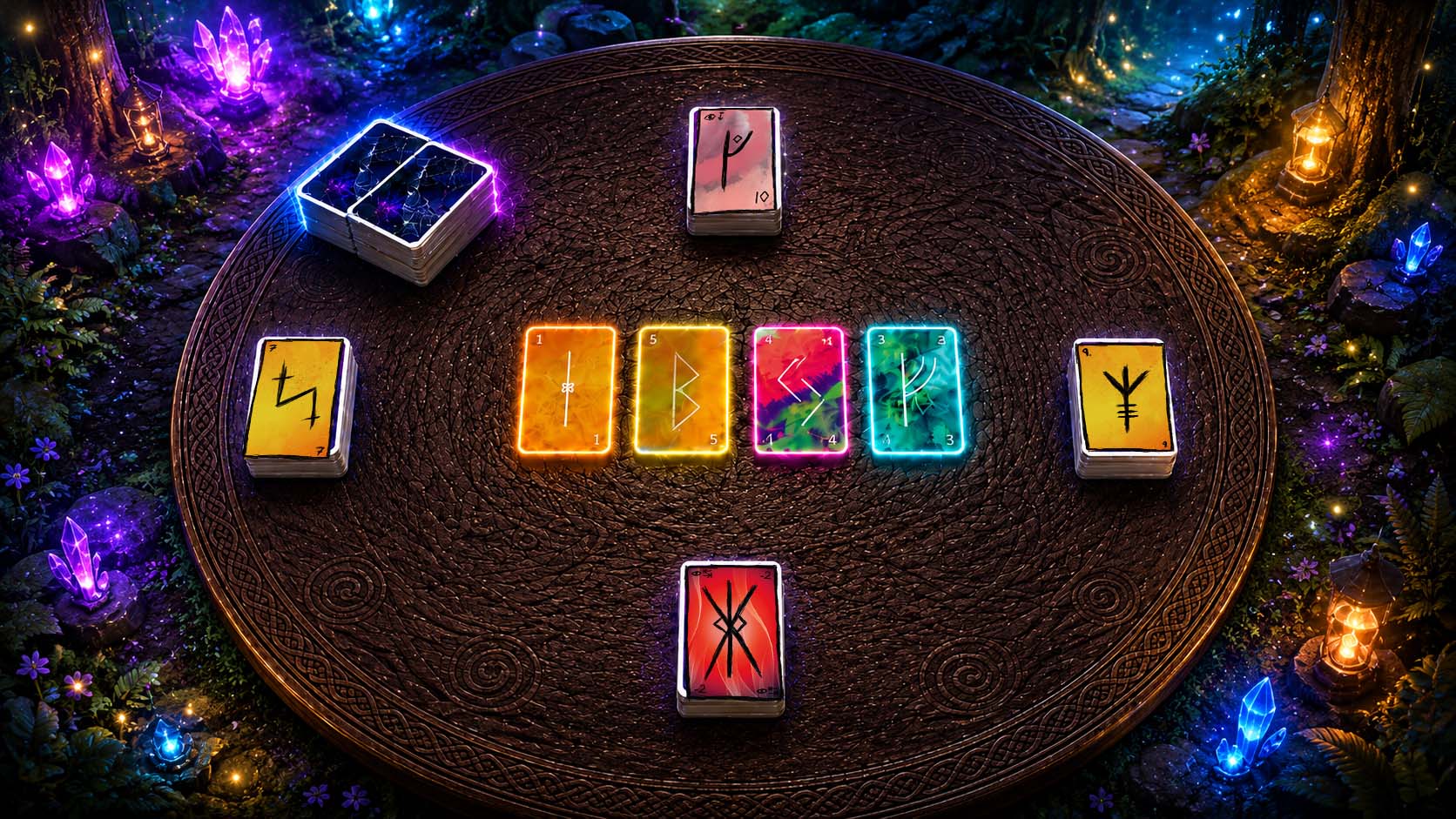
Deck-Deck-Go is another slower, relaxed option, built around sequencing cards and working with what becomes available to you.
Sometimes you're waiting for the cards you need. Then suddenly the right sequence opens up and you're able to play card after card in a long run.
It's easy to sit down, play through a round or two, and stay engaged without needing the constant intensity of something like Cambio.
Deck-Deck-Go also demonstrates how The Deck can expand beyond the original 76-card system.
Deck-Deck-Go requires a modified Double-Deck, which means you need two copies of The Deck to play.
That sounds like it might make it less convenient for travel, but the physical setup still stays extremely compact.
Each Deck comes in its own muslin bag. When you're using a modified Double-Deck game, you can keep the cards being used for that game in one bag and the remaining cards in the other. Instead of carrying another large board-game box, you're still essentially traveling with two small fabric bags.
That makes Double-Deck games surprisingly practical even in a van, RV or other space where storage matters.
Players: 2–6
Typical game: 15–30 minutes
Decks required: Modified Double-Deck
Learn how to play Deck-Deck-Go →
Why The Deck Comes in a Bag
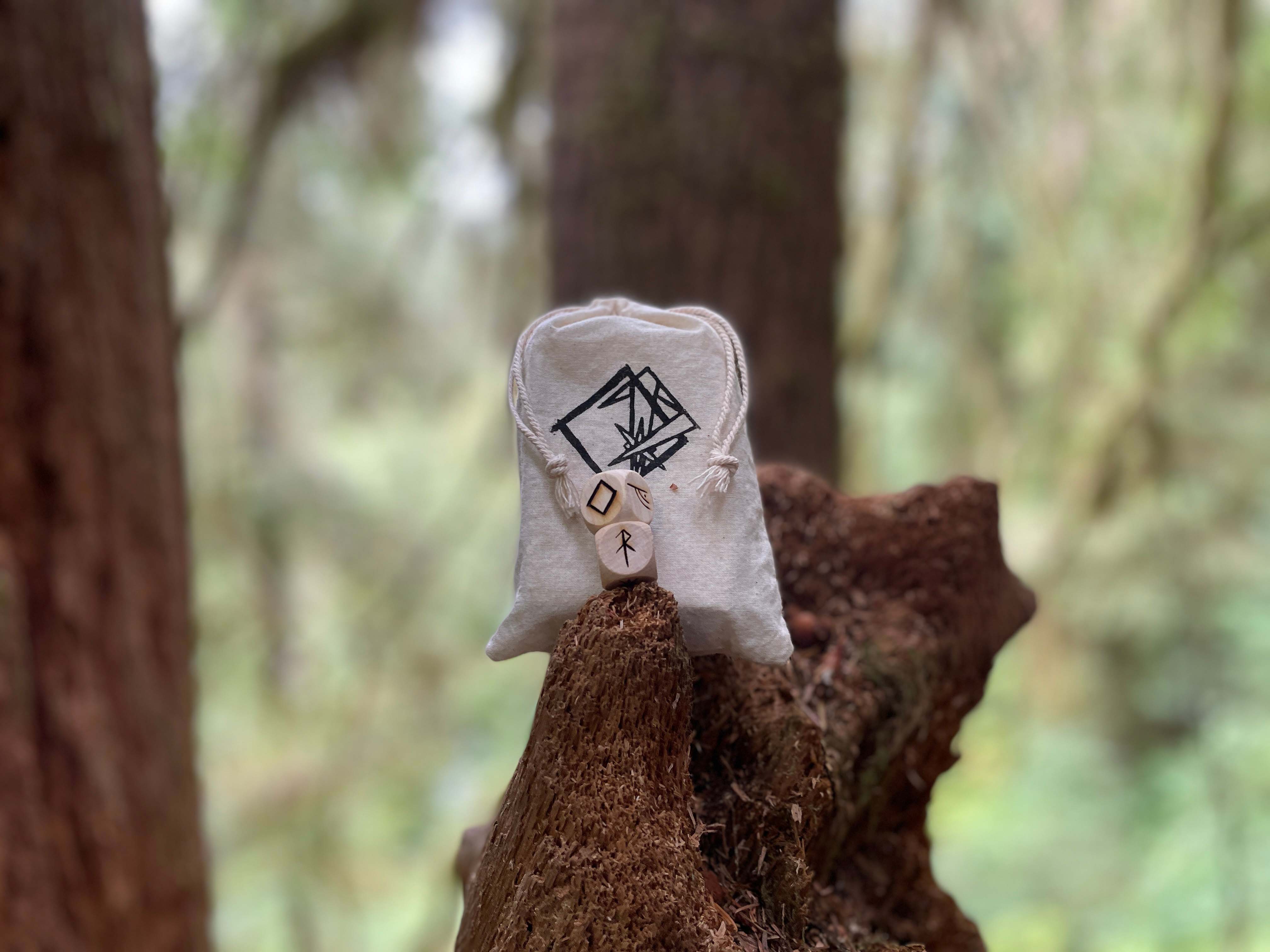
The muslin bag wasn't originally the plan.
The first version of The Deck used traditional tuck boxes. When the first bulk shipment arrived, however, so many of those boxes had been damaged during shipping that I couldn't send the product to Amazon the way I had intended.
After finally getting the cards manufactured, suddenly having a large portion of the packaging unusable was a pretty stressful problem.
The muslin bag came out of trying to solve it.
And it ended up being a much better solution.
A fabric bag doesn't crush in the same way a cardboard tuck box does. It can hold the entire Deck while remaining compact enough to throw into a backpack, drawer, glove compartment or travel bag.
As The Deck expanded, the bag became even more useful. Dice and other small additions can travel alongside the cards, and some game modes can incorporate things you find around you, such as stones.
There's also a QR code on the bag that leads back to TheDeck.Cards and the Game Mode Library.
Every bag sold so far has also been hand-stamped by me on both sides. It's a small part of the product, but it means there has literally been a human hand involved in finishing each one.
What began as a packaging problem ultimately created something much closer to the travel game system I wanted in the first place.
One Small Game System, Different Moods
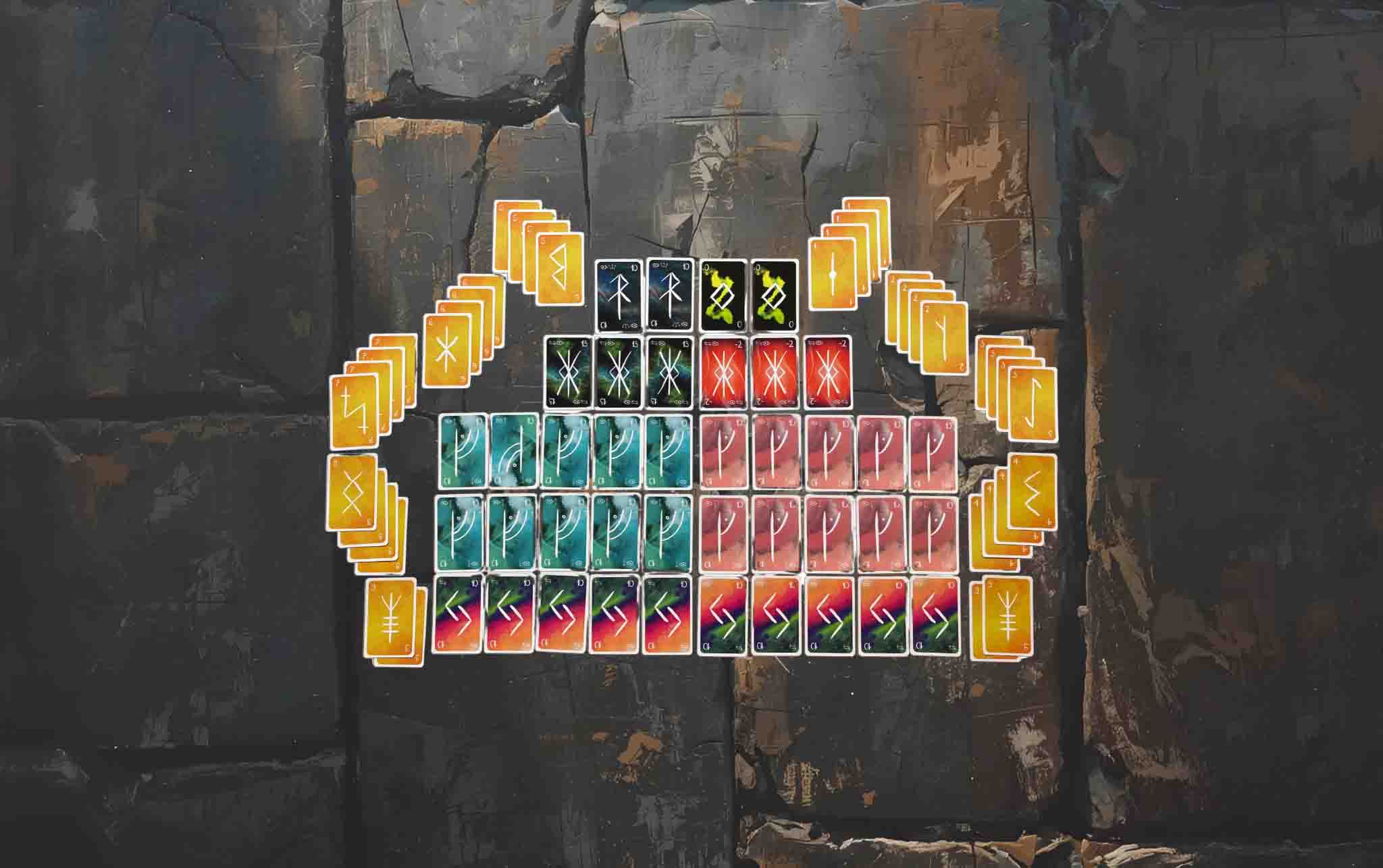
The biggest advantage of The Deck for travel isn't that one particular game is perfect for camping.
It's that you don't have to choose one game before you leave home.
Maybe you're at a restaurant and have ten minutes to kill. Play a couple rounds of Cambio.
Maybe you're sitting around camp and want something relaxed. Play Alaska.
Maybe several people are settled around a table after dark and want something more interactive. Pull out The Rune Market.
Maybe you want something slower and low-pressure. Set up Deck-Deck-Go.
The physical cards stay largely the same. The game changes.
For someone living in a house with unlimited storage, carrying several game boxes might not matter very much. When you're living in a van, traveling in an RV, taking a long road trip or moving from place to place regularly, every physical object has to justify the space it takes up.
That's a huge part of why I wanted one small system capable of providing a lot of variety.
Disconnect to Reconnect
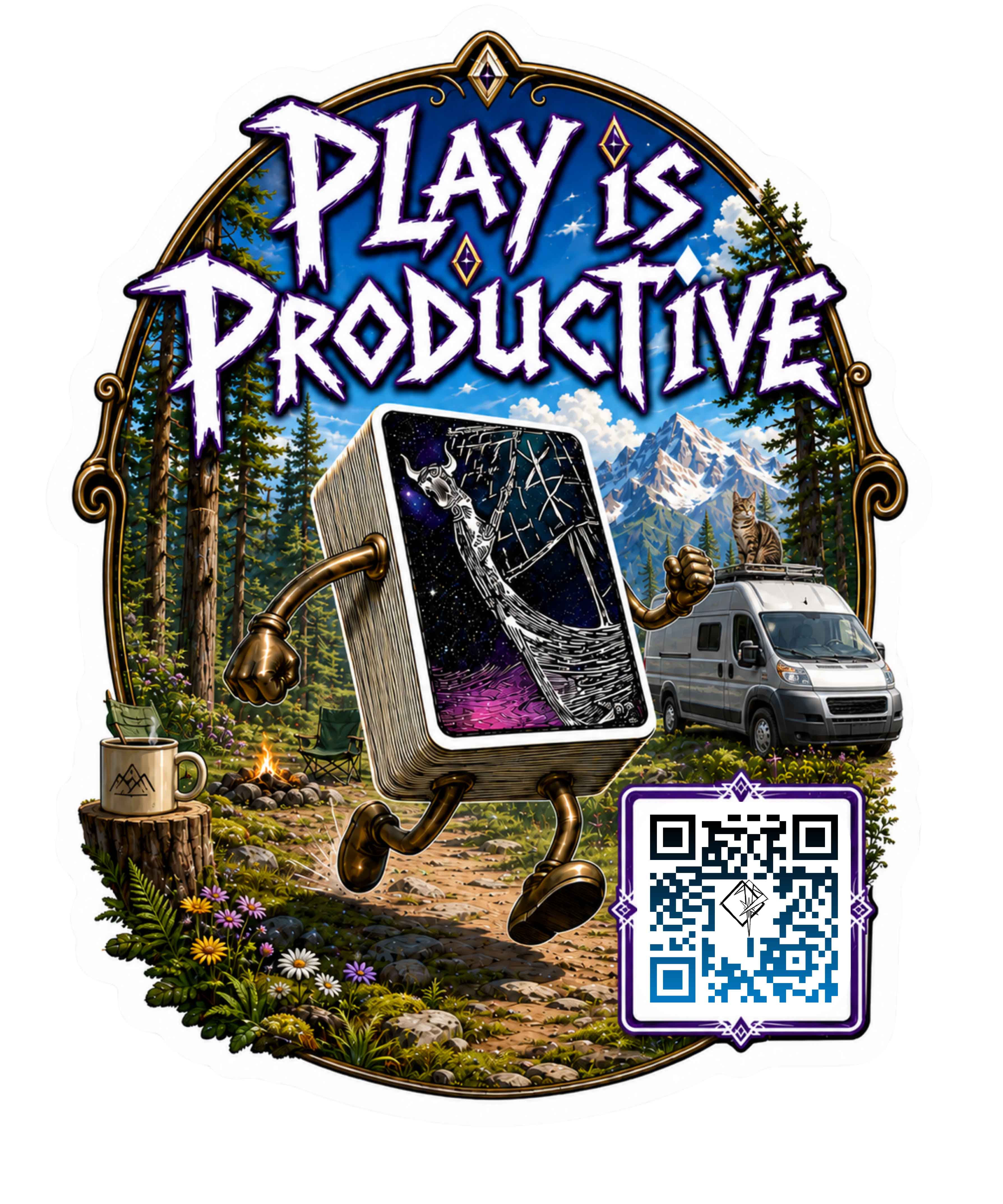
The Deck also came from wanting something physical in a life that had increasingly moved online.
I've spent much of my working life on the internet. Around the COVID era especially, I found myself thinking more about how valuable real face-to-face interaction actually is.
One of the ideas behind The Deck became simple:
Disconnect to reconnect.
You might initially use TheDeck.Cards or Learn With AI to learn how a game works, but once everyone knows the rules, the phone can go away.
You're sitting across from another person.
You're looking at cards instead of a screen.
You're laughing, competing, bluffing, talking and spending time together in the same physical place.
That fits naturally with camping and travel, where part of the reason you're out there in the first place may be to experience something beyond your normal digital routine.
For games that include an Ancient Scroll, you can also save those instruction images to your phone ahead of time if you're heading somewhere without cell service. Once you've learned how to play, however, the game itself doesn't require internet access at all.
Play Is Productive
Another idea behind The Deck is something I describe as Play is productive.
Play can look like you're doing nothing useful.
But play is often where you discover what actually holds your attention.
When people have room to relax, experiment, laugh, compete and follow their curiosity, they often find the things they genuinely enjoy doing. And when you genuinely enjoy doing something, you're much more likely to put energy into it beyond the minimum required.
The Deck itself came out of that kind of process.
It combines games I loved growing up, years of traveling, experimentation, mistakes, redesigns and simply continuing to play with ideas until something new appeared.
For me, bringing games into camping and travel isn't just about filling empty time.
Sometimes the empty time is the point.
A Card Game System Built for the Road
The Deck isn't the smallest possible object you could bring traveling, and it isn't the only card game you could take camping.
It is, however, the game system I wanted as someone who has spent more than a decade living a nomadic life.
One compact bag.
A 76-card system.
Multiple game modes.
Fast games, relaxed games, interactive games and longer games depending on the mood.
And if you add a second Deck, even more possibilities open up while still taking up very little physical space.
Whether you're living full-time in a van, traveling by RV, heading out on a road trip, camping for a weekend or simply looking for something physical to do with the people around you, that's what The Deck was built for.
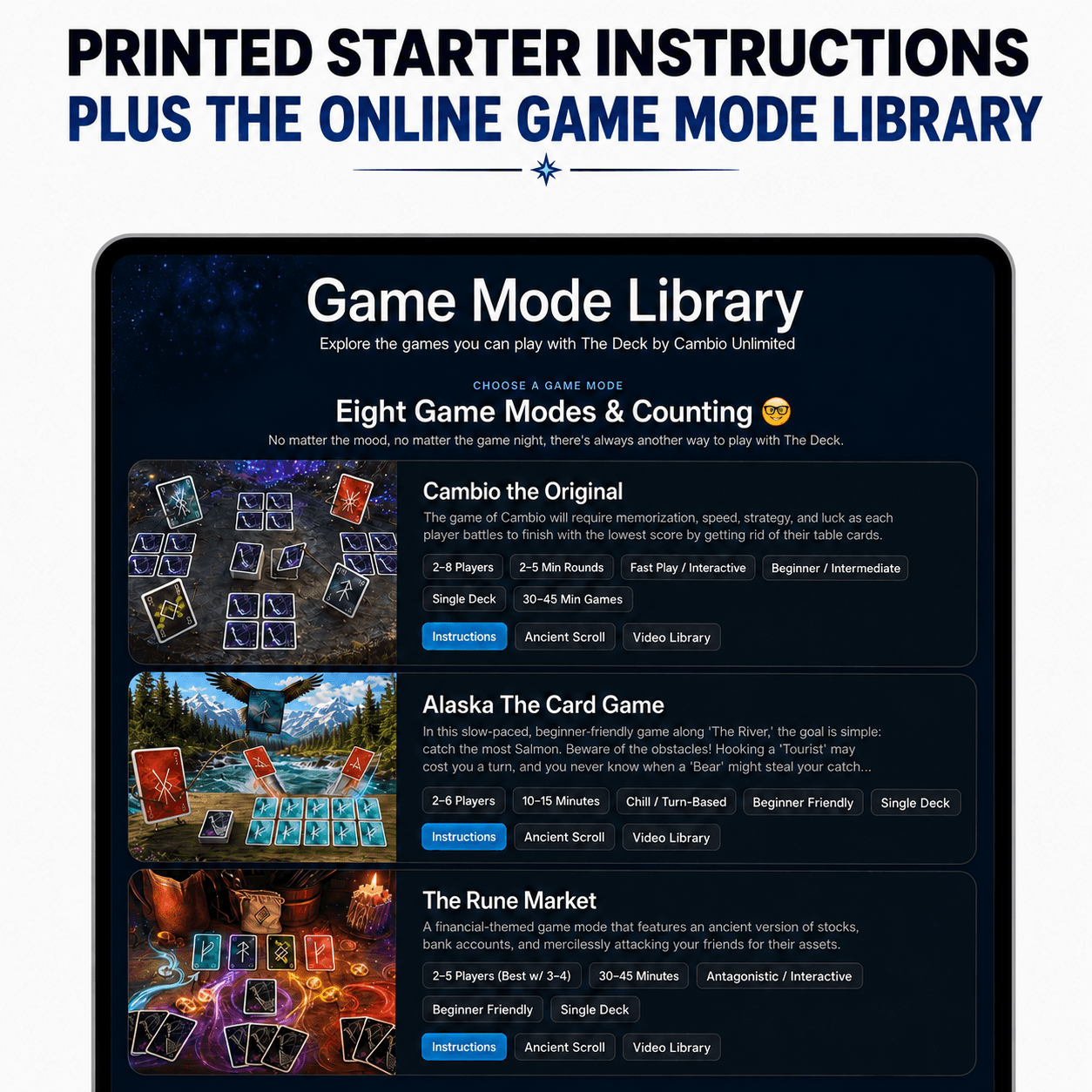
Explore the Game Mode Library to see all of the current games, player counts, game times, instructions and Learn With AI options.
Or, if you're ready to bring The Deck with you:
Explore The Game Modes
Buy The Deck on Amazon